CRITICAL PLACES; 15 SITES OF AMERICAN SLAVE REBELLION
(2019-Ongoing)
Critical Places is about how the rebellions of the enslaved are remembered (or not remembered) in the landscape. Through my experience of these places, as witnessed in my photographs, I am marking them as critical places in a topography of historical consciousness, bringing forward how I see these rebellions still echoing in social patterns and economic structures.
Some of the fifteen rebellions that I have selected to work on are better known, some more obscure. They span the overall timeframe of rebellions, roughly cover their geographic distribution, and also roughly cover their general typology: fight or flight, active or suppressed, real or falsely rumored. That said, this project is meant to be more a personal reflection on, rather than a historical representation of, the rebellions and their aftermath. I come to this project as an outsider, with all the advantages and disadvantages that might entail.
I have been traveling to these sites, photographing, and then where possible also returning to exhibit the work in a venue associated with the rebellion, presenting the photographs accompanied by a short text telling of the rebellion and of my experience visiting the site. In these exhibitions I work with people met locally to build awareness and initiate a reckoning around modes of remembrance.
To date such exhibitions have been held at the Boyden Gallery, Saint Mary's College of Maryland, the South Slave Cabin Gallery, The Melrose, National Park Service, Natchez, Mississippi, the Southwest Mississippi Center for Culture and Learning, Alcorn State University, Lorman, Mississippi, the Lincoln Colored School, Canton, Missouri, and the School of International and Public Affairs, Columbia University, New York.
In 2025 I was the recepient of a Guggenheim Fellowship for this project.
(Link to installation views)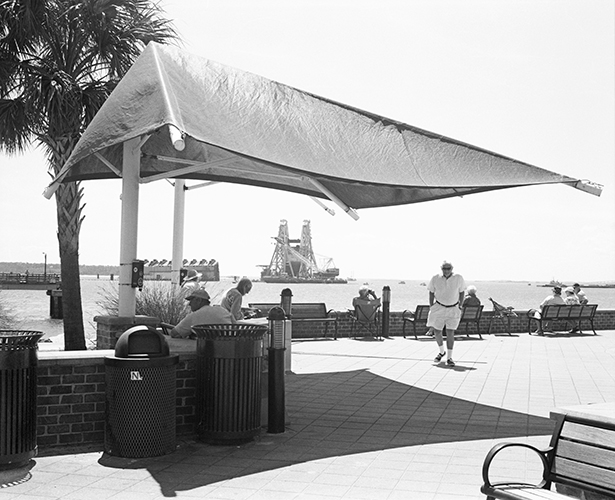
Saint Simon's Island, Georgia. 2021.
The Igbo Landing Mass Suicide of 1803.
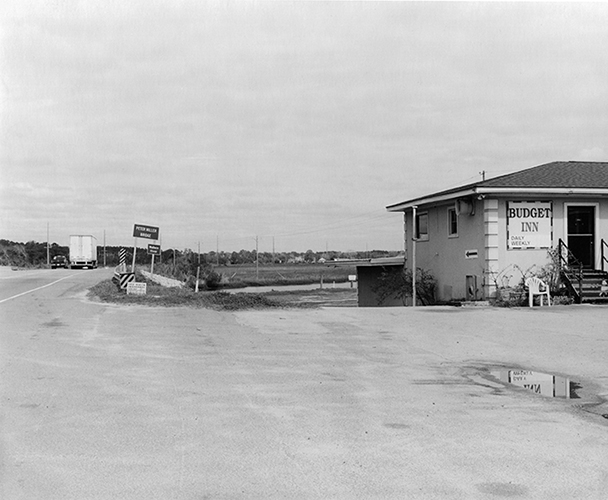
U.S.Highway 17 at Wallace River, South Carolina. 2020.
The Stono Rebellion of 1739.
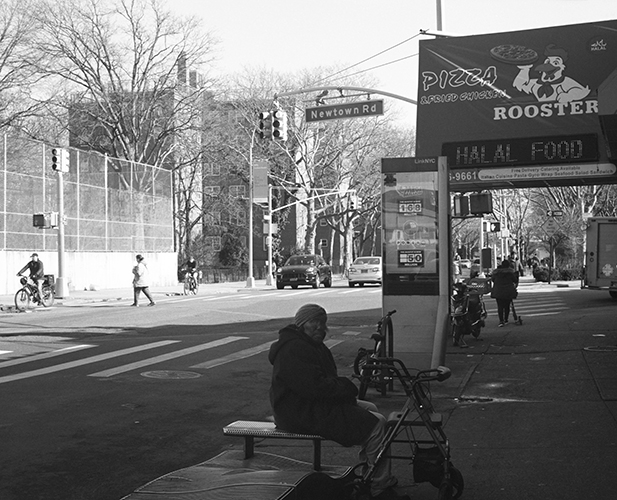
Astoria, Queens, New York. 2020.
The Newtown Revolt of 1708.
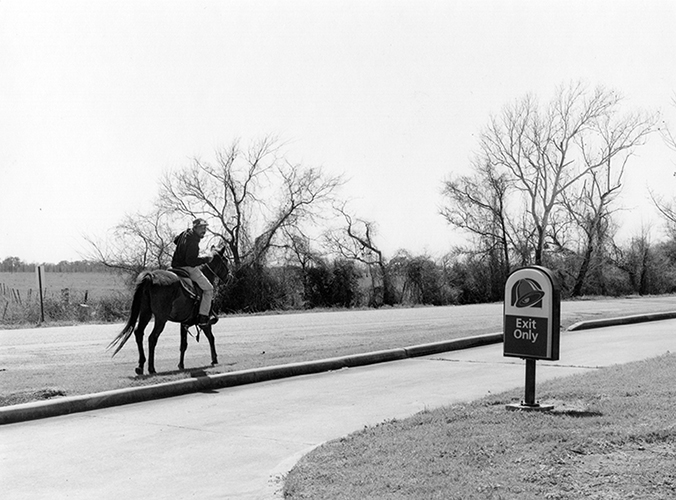
Colorado County, Texas. 2022.
The Slave Insurrection Panic of 1856.
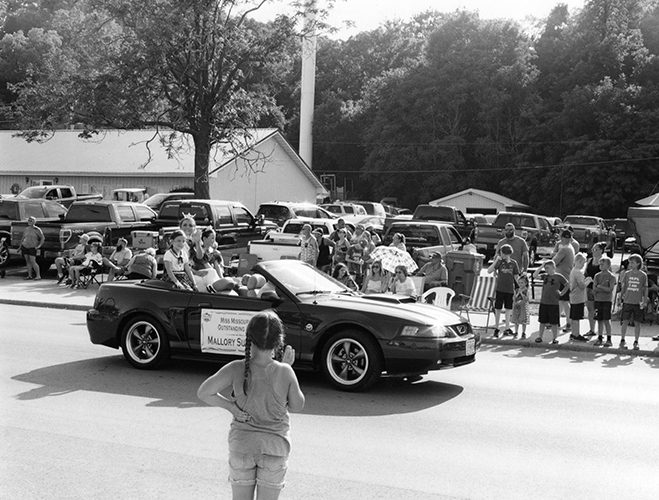
La Grange, Missouri. 2022.
The Lin Uprising of 1849.
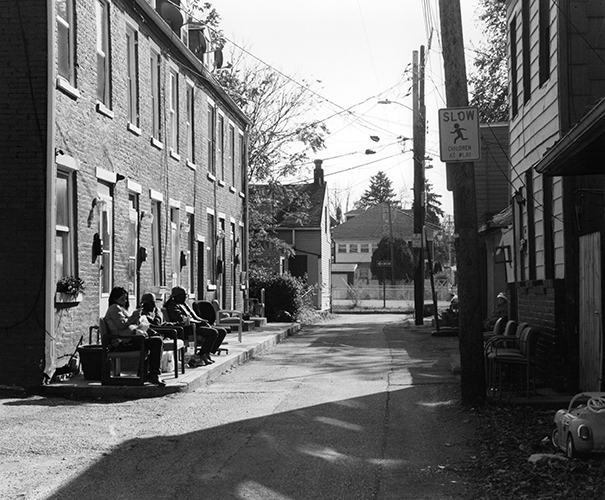
York, Pennsylvania. 2019.
The Margaret Bradley Conspiracy of 1803
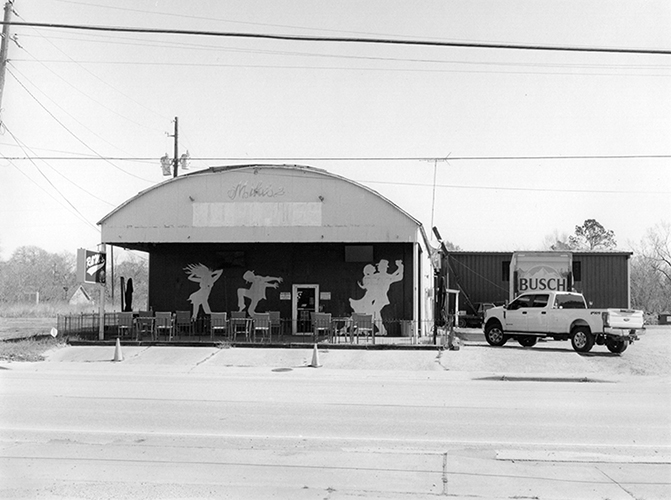
Mike's Ice House. Eagle Lake, Texas. 2022.
The Slave Insurrection Panic of 1856.
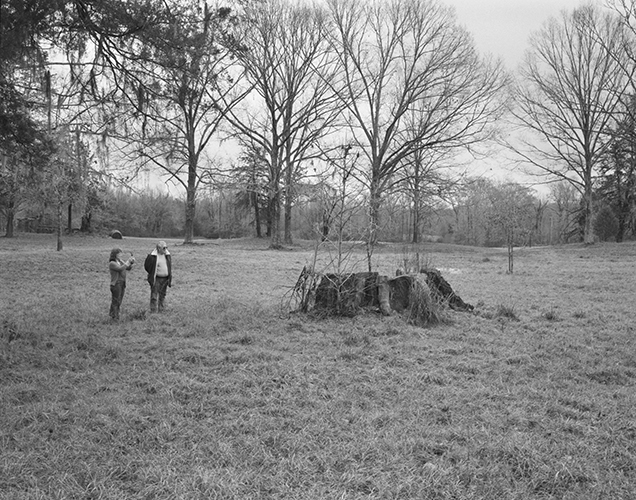
The Hanging Tree. Cherry Grove Plantation. Adams County, Mississippi. 2024.
The Second Creek Conspiracy of 1861
15 Rebellions:
The Newtown Revolt of 1708. Astoria, Queens, New York. 2020-2023
Initiated by an enslaved Native American man and his enslaved African wife, this rebellion is far lesser known than other New York revolts. Exemplifying the multi-racial nature of slavery in Dutch and British colonies, it also manifests the emergence of a racial definition of slavery.
The Stono Rebellion of 1739. Ravenel and Hollywood, South Carolina. 2020
One of the few acknowledged by a historical marker, this was the bloodiest of the colonial era, instilling a fear of rebellion that persisted throughout the time of slavery. One might even wonder to what extent the trope of Black "savagery" persisting to this day originated in this revolt.
The Margaret Bradley Conspiracy of 1803. York, Pennsylvania. 2019
Protesting what the enslaved perceived to be an unjust conviction of one of their own, this rebellion started with a series of nighttime arson attacks and soon spiraled into further violence. Today we refer to such protests as No Justice, No Peace.
The Igbo Landing Mass Suicide of 1803. Saint Simons Island, Georgia. 2021
Oral history tells us of this mass drowning of a shipload of captive Igbo Africans who refused slavery by walking into the creek. That it was long dismissed as legend speaks to the bias against non-archival evidence. The traditional site known as Igbo Landing is situated on private property.
The 1816 Massacre at Negro Fort. Prospect Bluff, Florida. 2024
Over 300 men, women, and children were killed here in what seems to me to be one of the first mass killing of civilians using the technologies of modern warfare. In its aftermath we can see the first iterations of what is now referred to as Critical Race Theory. Though landmarked, the fort is inaccessible, closed off from the public.
The Easter Rebellion of 1817. Saint Inigoes, Maryland. 2020
A bar brawl that turned into a riot took place near the Jesuit slave plantation of
St Inigoes Manor. Many descendants of the enslaved still live in the area today.
One might point to this Easter Rebellion as an instance of overpolicing.
The Maroon Raiders of the Great Dismal Swamp. 1823. Suffolk, Virginia and Camden County, North Carolina 2023
Seen at the time as dehumanized "murdering monsters in human shape," today one might admire these men and women who eked out a marginal survival amidst the simmering heat and swarming insects of that swampland. These maroon bands were one of the few successful forms of active resistance to the slave system.
The Nat Turner Insurrection of 1831. Southampton County, Virginia. 2023
In this most infamous of all the rebellions, some 65 white men, women, and children were killed by Nat Turner's band of rebells, and 175 enslaved as well as free Black men and women were killed in retaliation. The extremity of that violence was such that it can be said to have provoked our first major media event, and its notoriety percolates to this day, with tours are offered of "Nat Turner Country." Four people, each with a unique personal connection to those events, guided me through the sites. Also of note are William Drewery's photographs taken in 1900 of all the rebellion sites, a rare and little known photographic record made at a time when the rebellion was still a "living memory."
The Madison County Rebellion of 1835. Madison County, Mississippi. 2021
Mass hysteria over a rumored rebellion led to widespread hangings not only of the enslaved but also of white people alleged to be co-conspirators. Eventually, it all died down and even the town of Livingston where it all took place faded into obscurity, and disappeared. A developer has recently recreated the frontier town as a shopping and dinning destination.
The Cheneyville Conspiracy of 1837. Cheneyville, Louisiana. 2021, 2024
Many rebellions were betrayed before they could get started. In this instance it was the man planning to lead the rebellion who turned himself in at the last minute. While his seven accomplices were hanged, he was awarded his freedom plus a handsome bounty. Considering how today so many put their self-interest first, one might ask: was he so different in doing whatever was necessary to attain his freedom?
The Doyle Stampede of 1848. Northern Kentucky. 2022
In these events we see an example of racial disparity in sentencing: three enslaved rebel escapee "leaders" where sentenced to hang, while the white abolitionist who organized the escape was sentenced to 20 years hard labor. I came across an account of the rebellion told by one of the enslaved. What we know of these rebellions is almost universally told by the enslavers —rarely did the enslaved live to tell their story.
The Lin Uprising of 1849. Lewis County, Missouri. 2022
The roll that enslaved women played in rebellions has long been minimized if not ignored. This little known uprising was led by an enslaved cook, Lin, who was inspired by a dream to lead an escape to freedom. At the farm where she was enslaved, the farmer, a descendent of the original homesteader, had heard of there having been a rebellion, but nothing about Lin.
The Slave Insurrection Panic of 1856. Colorado County, Texas. 2022
An unfounded suspicion led to confessions made under torture, mass floggings and hangings. And then the local Mexican population was scapegoated for having provoked the alleged rebellion, and expelled from the county. A resolution was passed "forever forbidding any Mexican from coming within the limits of the county."
The Winston County Conspiracy of 1859. Louisville, Mississippi. 2021
The abolitionist press ran a story about a traveling portrait photographer (a white man) hanged, along with others, accused of fomenting a revolt. Unable to verify the story in the local contemporaneous newspapers, I started to wonder if this particular incident was, unwittingly, abolitionist misinformation. Visiting Louisville, I found myself surrounded by contemporary disinformation. To mention a few: the public display of a swastika that was claimed not to be one, a civil war memorial that pretended not to be so, a resort with a false Indigenous name...
The Second Creek Conspiracy of 1861. Adams County, Mississippi. 2021, 2024
Forty enslaved men were hanged in the course of this falsely suspected conspiracy that took place during the Civil War. Not wanting to inflame the situation, the plantation owners kept the hangings secret. It was a secret that they maintained for 110 years —an example of how those in power control information. Today Cherry Grove Plantation, where the majority of hangings took place, remains in the hands of the same family. Visiting, I was shown the stump of the hanging tree recently felled in a storm.